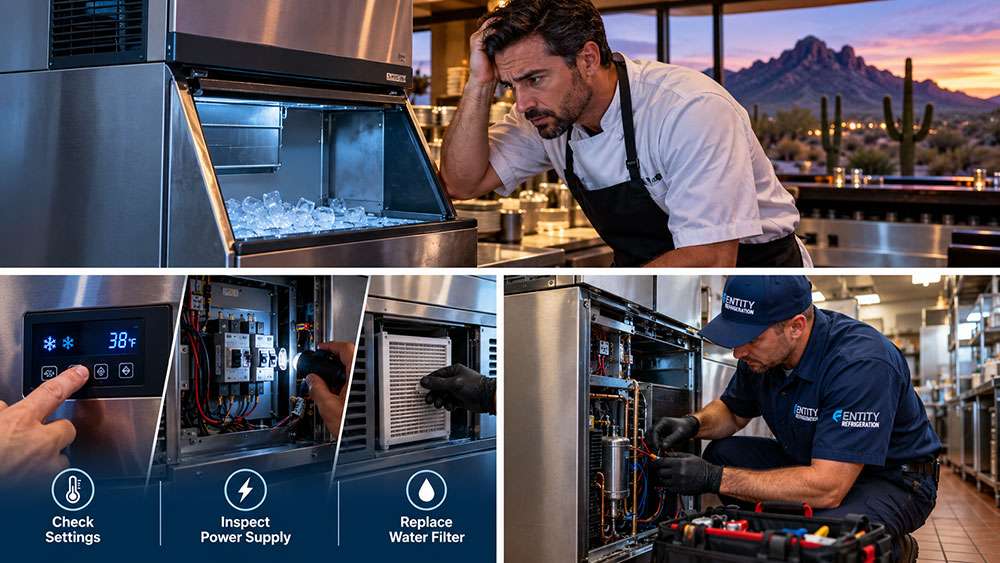
A commercial ice machine not making enough ice in Cave Creek, AZ can quickly become a serious operational problem for restaurants, bars, cafés, hotels, convenience stores, catering companies, and commercial kitchens. When ice production suddenly drops, businesses may struggle to keep drinks cold, maintain food-service operations, or serve customers efficiently during busy periods.
Reduced ice production does not always mean the entire machine has failed. Problems can come from restricted water flow, dirty condenser coils, high surrounding temperatures, clogged filters, refrigeration problems, sensor issues, or poor maintenance.
Entity Refrigeration provides commercial refrigeration troubleshooting and repair throughout Cave Creek and surrounding Arizona communities. Understanding the most common reasons for low ice production can help you decide whether the problem requires simple maintenance or professional service.
How Much Ice Should a Commercial Ice Machine Produce?
Commercial ice machines are designed to produce a certain amount of ice within a 24-hour period under specific operating conditions. Actual production can vary depending on the machine model, ambient temperature, water temperature, ventilation, usage, cleanliness, and condition of the refrigeration system.
If a machine that normally keeps up with daily demand suddenly begins producing noticeably less ice, that change should not be ignored.
Low production may be one of the first signs that a component is beginning to fail.
Businesses that rely heavily on ice should monitor production regularly instead of waiting until the storage bin is completely empty.
Why Is My Commercial Ice Machine Producing Less Ice?
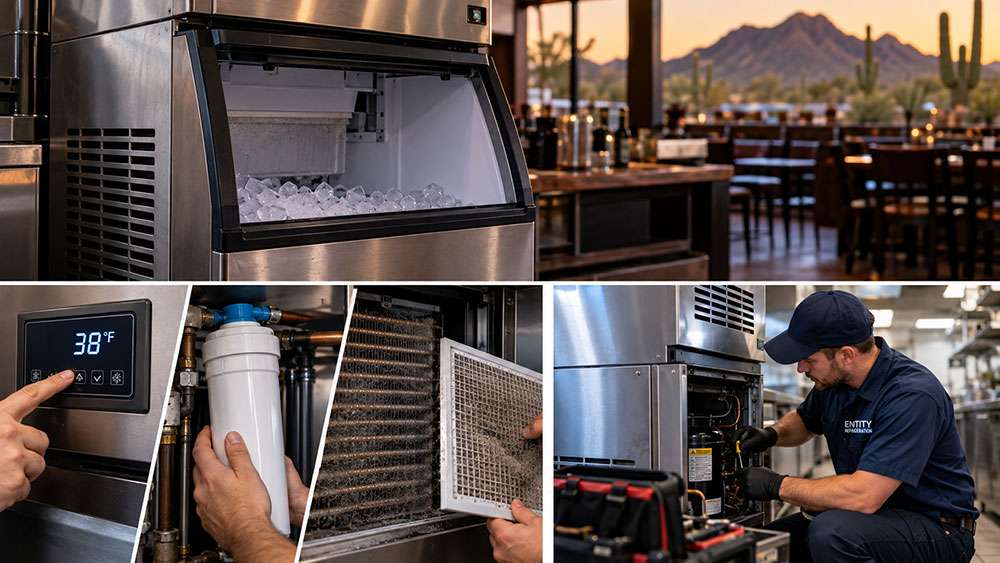
Several different issues can reduce ice production. Some are relatively simple, while others require refrigeration or electrical diagnosis.
1. Dirty Condenser Coils
Commercial ice machines generate heat during the refrigeration cycle. The condenser must release that heat efficiently.
When condenser coils become covered with dust, grease, or debris, heat transfer becomes more difficult. This can make the refrigeration system work harder and reduce overall ice-production capacity.
Dirty condensers are especially common in restaurants and commercial kitchens where airborne grease and dust can accumulate quickly.
Regular condenser cleaning can help maintain efficient operation.
2. High Ambient Temperature
Commercial ice machines often operate inside kitchens, utility rooms, bars, or other areas where temperatures can become high.
In Cave Creek and other Arizona communities, hot weather can place additional stress on refrigeration equipment. If the room surrounding the machine becomes too warm, the unit may take longer to complete each freezing cycle.
That means fewer batches of ice can be produced during the day.
Proper ventilation around the equipment is important. Air vents should not be blocked, and hot air from nearby cooking equipment should not be directed toward the ice machine.
3. Water Supply Problems
Ice production depends on a steady supply of water.
Low water pressure, partially closed valves, clogged supply lines, dirty filters, or malfunctioning inlet valves can reduce the amount of water entering the machine.
When insufficient water reaches the freezing section, you may notice:
- Smaller ice cubes or irregular ice shapes.
- Slower ice-production cycles.
- Reduced total daily production.
- Machine error codes or unexpected shutdowns.
- Empty or unusually low ice-storage levels.
If water flow appears restricted, the supply system and filter should be inspected.
4. Dirty or Clogged Water Filter
Commercial ice-machine water filters help reduce sediment and other contaminants entering the equipment.
Over time, filters can become restricted.
A clogged filter can reduce water flow enough to affect production even when the rest of the machine is functioning correctly.
Filter replacement frequency depends on the equipment, water conditions, and manufacturer recommendations.
Restaurants and commercial kitchens should include filter inspection as part of routine maintenance rather than waiting for production problems to develop.
5. Refrigeration System Problems
An ice machine is essentially a specialized refrigeration system. If refrigeration components are not operating correctly, ice production may slow down or stop.
Potential refrigeration issues include problems involving:
- Refrigerant conditions
- Compressor
- Evaporator
- Condenser
- Fan motors
- Expansion or metering components
- Electrical controls
Professional refrigeration diagnosis is recommended when the machine runs but does not freeze water efficiently.
Entity Refrigeration provides commercial refrigeration services for businesses that depend on reliable temperature-controlled equipment.
6. Dirty Evaporator
The evaporator is the surface where ice forms.
Mineral scale, dirt, or other buildup can interfere with heat transfer and make it more difficult for ice to form and release correctly.
An evaporator that is heavily scaled may cause longer freeze cycles, irregular cubes, incomplete harvest cycles, or reduced production.
Proper cleaning should follow equipment-manufacturer procedures. Harsh chemicals or incorrect cleaning techniques can damage components.
7. Ice Thickness or Sensor Problems
Many commercial ice machines use sensors or controls to determine when ice has reached the correct thickness and when the harvest cycle should begin.
A dirty, misaligned, or malfunctioning sensor may cause incorrect cycle timing.
This can lead to:
- Thin ice
- Oversized ice
- Long freeze cycles
- Failed harvest cycles
- Reduced production
Electronic controls should be professionally inspected when normal cleaning does not solve production issues.
8. Poor Airflow Around the Machine
Air-cooled ice machines need sufficient airflow around the condenser.
If equipment, boxes, supplies, shelving, or walls block ventilation openings, hot air may become trapped around the unit.
Restricted airflow can reduce refrigeration efficiency and make the machine work harder.
Always maintain the equipment clearances recommended by the manufacturer.
9. Ice Bin or Storage Problems
Sometimes the ice maker is producing normally, but the problem appears to be low production because ice is melting or storage conditions are poor.
Possible issues include:
- Damaged bin insulation
- Door or lid not sealing properly
- Excessive heat around the bin
- Drainage issues
- Employees leaving the bin open
Inspect both the ice-making unit and storage bin when troubleshooting production problems.
Commercial Ice Machine Repair for Cave Creek Businesses
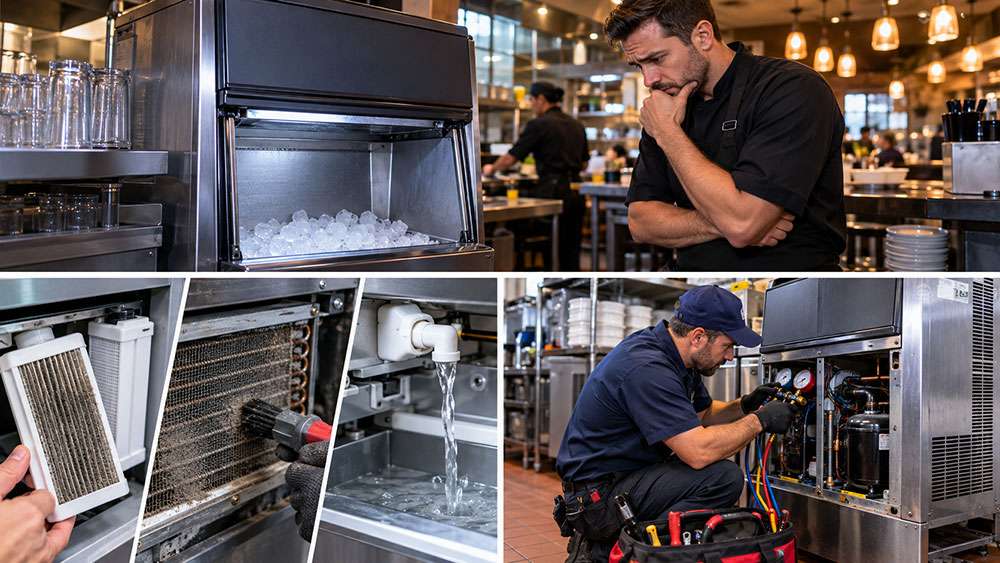
Restaurants and hospitality businesses often depend on commercial ice machines throughout the entire operating day.
A small drop in production can become much more noticeable during:
- Lunch and dinner service
- Busy weekends
- Events
- High-temperature days
- Large catering orders
- Increased seasonal demand
If routine checks do not restore normal production, professional Ice Machine Repair in Cave Creek, AZ can help identify the underlying mechanical, refrigeration, water, or electrical problem.
The goal should be to diagnose the cause rather than repeatedly resetting the equipment or replacing unrelated parts.
Signs Your Ice Machine Needs Professional Repair
Low production is not the only warning sign.
A commercial ice machine may need professional service when it:
Produces no ice at all, frequently shuts down, develops water leaks, makes unusual noises, freezes up repeatedly, creates unusually small or irregular cubes, takes significantly longer to complete cycles, or displays persistent error codes.
If several symptoms appear together, continuing to operate the equipment may place additional strain on refrigeration or electrical components.
Should You Turn Off an Ice Machine That Is Not Working Correctly?
That depends on the problem.
If the machine simply appears to be producing less ice but is otherwise operating normally, you can check basic issues such as water supply, ventilation, and accessible filters.
However, shut the machine down and seek professional service if you notice:
Electrical burning smells, major water leaks near electrical components, loud mechanical noises, repeated breaker trips, serious freezing problems, or other potentially unsafe conditions.
Do not remove electrical panels or attempt refrigerant repairs without appropriate training and equipment.
How Regular Maintenance Helps Ice Production
Preventive maintenance can help reduce many common causes of low production.
Routine commercial ice-machine maintenance may include cleaning condenser coils, replacing water filters, inspecting water lines, checking drains, cleaning the evaporator, examining electrical connections, testing controls, and
